By Thainá Gama,
Game Designer at Kokku
Let’s start this article by talking about the difference between terror and horror. Both concepts are linked to the same situation; basically, terror is the anticipation, the feeling that a kind of bad thing might happen, and horror is the sensation of dread that comes after seeing something or passing through a very scary situation. To sum up, terror comes before, and horror comes after, and it’s all based on one emotion: FEAR.
Fear. This little four-letter word carries a big concept and holds great importance in nature. It’s a universal emotion, and according to Paul Ekman, a psychologist and pioneer in emotion studies, fear has a vital function: to protect and help one react to challenging situations and threats, whether real or imagined. So, fear is fundamental to survival!
And you can see it in a Disney Pixar Animation, for example.
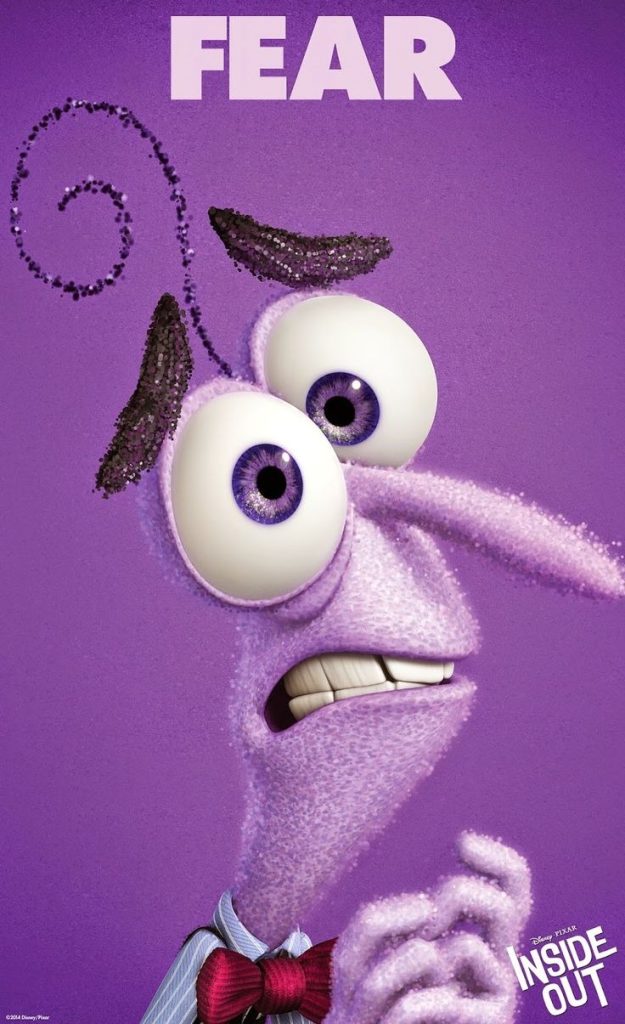
(Fear from Inside Out movies, by Disney Pixar Animation Studios)
A short history of horror games
The first game that uses a horror element was Haunted House (1982), published by Atari, Inc., which consists of collecting pieces of a magic urn. The elements of horror are basic: the mansion and the enemies as ghosts, bats, and spiders that players must avoid and run away from to survive. Some people don’t consider this game a horror game, but they can’t deny that it has those elements.
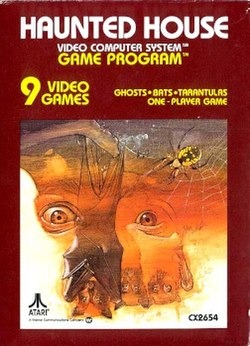
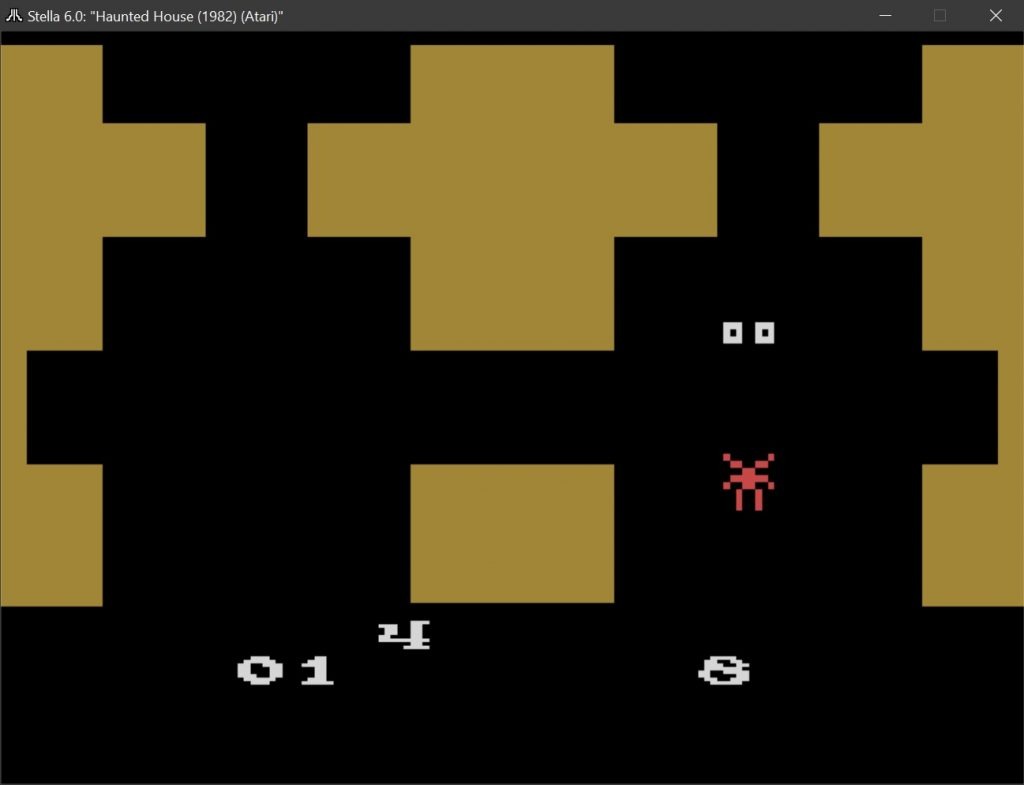
(Haunted House by Atari)
Passing the time, in the 90s, the genre was getting force with the style Survival Horror! “Alone in the Dark” was the first 3D game to console basics like fixed cameras, focus on exploration, and tank control. This game, in particular, was responsible for directly influencing a huge franchise that you probably heard about: RESIDENT EVIL.
In 1996, Capcom released the most famous survival horror franchise, which was responsible for returning zombies to pop culture and popularizing the safe rooms. Resident Evil was the first game to use a limited inventory and value the save point using writing machines. Besides that, its use of narrative-based exploration. One of the main points this franchise builds their legacy on is: puzzles! Resident Evil has had a large influence on game history and has made a lot of fans over the years, and the proof is the success of Resident Evil Requiem!
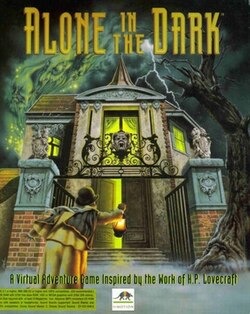
(Alone in the Dark by Infogrames, 1992)
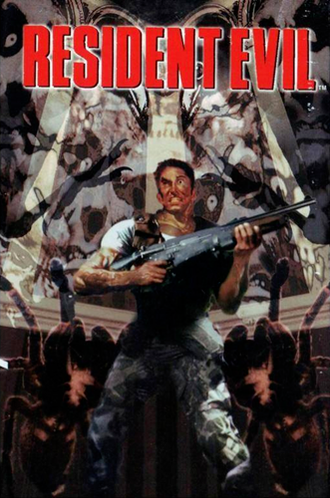
(Resident Evil by Capcom, 1996)
Another mark on horror games was OUTLAST, released in 2013. This game was responsible for introducing helplessness, a survival horror based on persecution in which players can’t defend themselves as part of the gameplay. The only mechanics are to hide or run from the ‘creatures’, which reminds us how fear works: paralyzed or run, causing a desperate sensation.
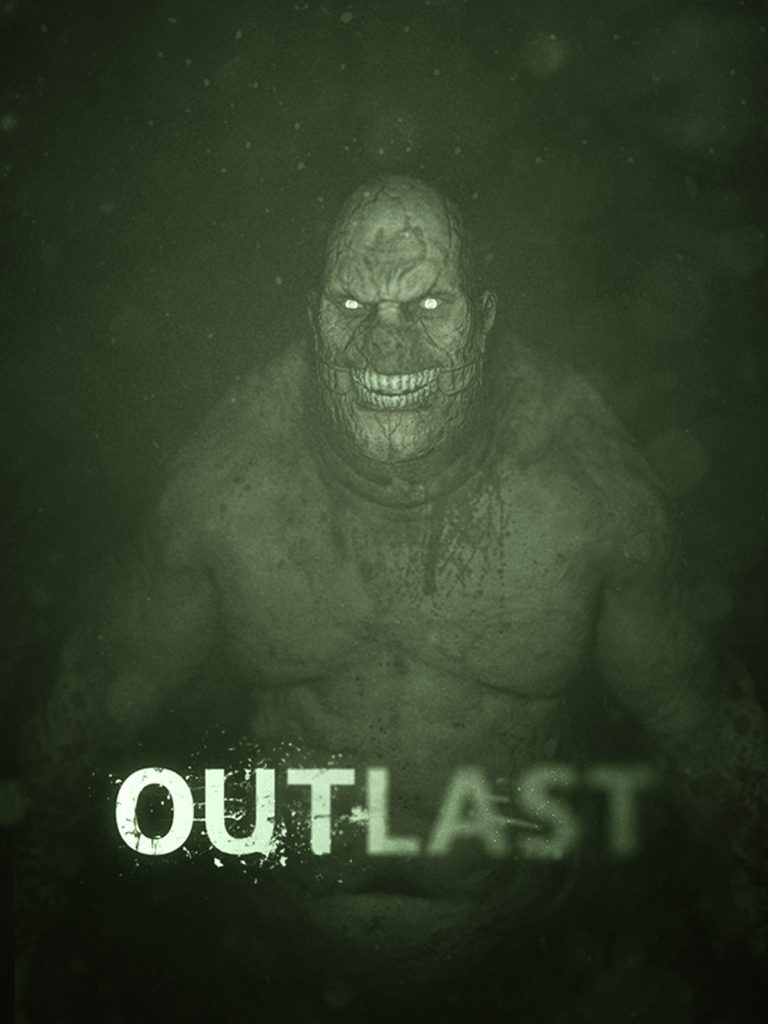
(Outlast by Red Barrels, 2013)
On actual days, with the streamers’ ascension game like Five Nights at Freddy’s, Bendy and the Ink Machine, and many others have been successful. Focus on Poppy Playtime, a game based on elements that we can see in Resident Evil, Outlast, and others that came before. This game has a huge community, with a lot of theories about a macabre story, and the amount of jump scares has made it the formula for success with streamers.
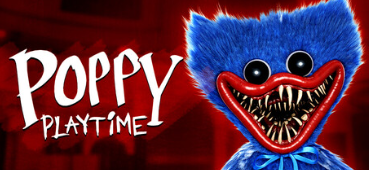
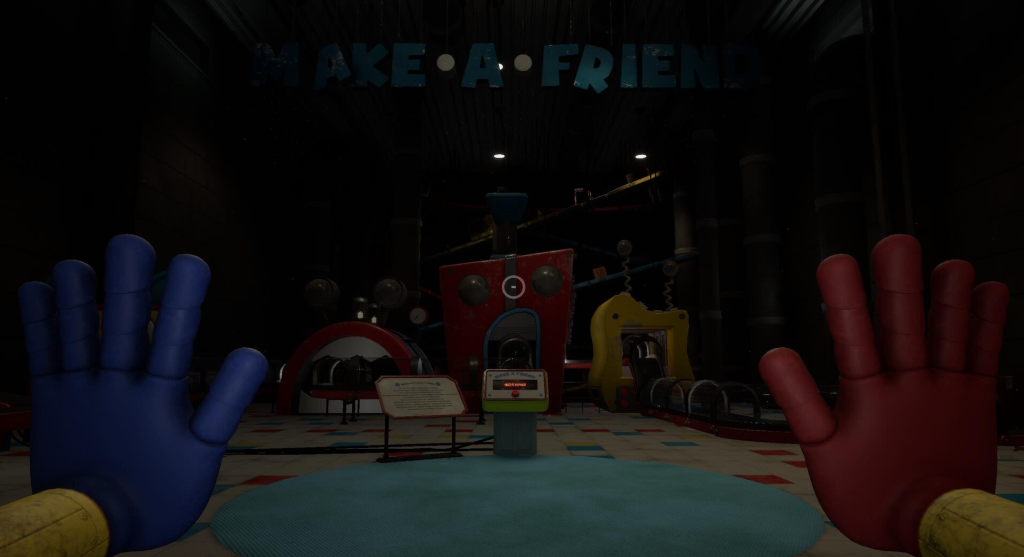
(Poppy Playtime by Mob Entertainment)
Why do horror games succeed?
Because of FEAR! At the beginning of this conversation, there’s a brief explanation of why fear is important, but how does it work? When we see something dangerous, our brain sends a signal to us to be alert, and quickly, a part of the brain (amygdala) processes this information, and releases adrenaline throughout the body, and then we react, and this reaction can be: fight, freeze, or flee. And you can see these reactions through games, right? Sometimes the character will run away, hide, or fight against the enemies.
Simplified neural circuit of fear:

One point on this circuit is the ADRENALINE, responsible for making us react. It’s the principal element when we talk about terror/horror. Adrenaline starts, reaction becomes, and after dopamine comes. This rollercoaster is the key: feeling fear in a safe space makes us experience a mix of sensations when we watch a horror movie or play a horror game. After the scary situation, the pleasure and relief appear, and the players feel rewarded.
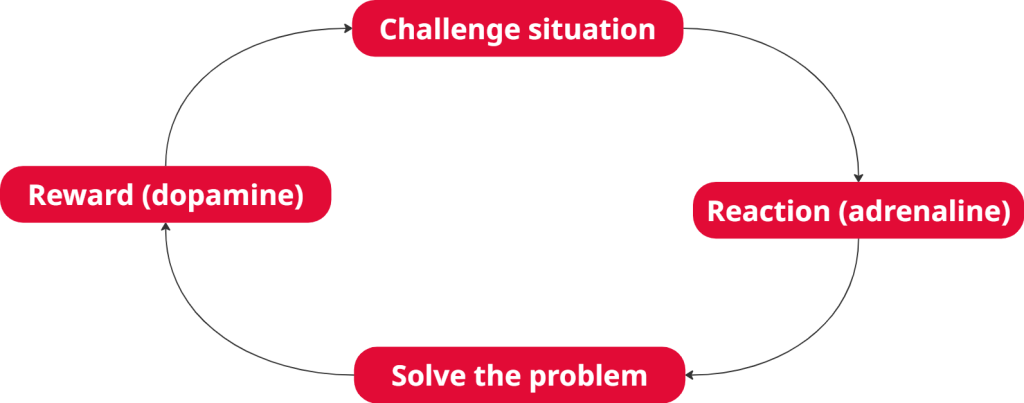
It’s brain chemistry! That’s why it’s so addictive, besides, of course, other elements that make gameplay so enjoyable.
Essential elements for horror games
Environment
A good immersive atmosphere in horror games pervades to create an environment full of weird sounds, stark silence moments, tense music, combined with visual elements like dim lighting, darkness, shadows, and small, claustrophobic spaces. These elements contribute to sensations and emotions to players, creating a rhythm that balances adrenaline and dopamine.
Priming
It’s a psychological concept where one stimulus unconsciously influences a response to a subsequent stimulus. In games, this can be used by anticipation, a light, tense song, or a strange message to prepare players for what’s coming. This implicitly encourages more careful, intensified attention to imminent danger without conscious awareness, teaching the game through implicit memory.
Eeriness
The lack of incomplete information, not knowing what is happening or why, increases a sense of mystery and curiosity. Importantly, playing with eeriness is essential to creating the feeling that something abnormal is happening. Games like Silent Hill F explore this concept by transforming mundane activities, such as walking in your own city, into sources of weird and uncomfortable experiences, where players sense an event but cannot identify its cause.
Narrative
A good horror game doesn’t necessarily need a complex narrative with many plot twists. It can be a simple plot with human experiments, killing zombies, or a complex philosophical existentialist history, but what makes terror interesting is the unknown. Players likes when they can discover history’s pieces through scenario elements such as documents, photos, messages, and puzzles; they like to use their own imagination and interpretation to fill the lacunae. Being responsible for moral choices, one feels the full impact of the mystery and the actions.
Vulnerability
Players must feel vulnerable, creating urgency and tension. The character shouldn’t be overpowered, which can be achieved in survival horror through resource management on a small inventory, or by removing combat, preventing players from defending or even avoiding threats, as in the OUTLAST game. But be careful with this, safe rooms are necessary to balance tension and “peace” to players, and don’t feel vulnerable all the time.
Tips to make a horror game
Having references is important, not only for horror games but also to create and have new ideas. On games, play classics, it’s a good approach, but don’t limit yourself only to games, read books, watch movies, listen to music, observe what’s around you, these things bring us inspiration, so, yeah, references are a good way to start.
Always remember to ask yourself this question before creating a thing: “What?” “Why?” “For what?” “How?”
Instigate curiosity in your game; players appreciate discovering pieces of a story. Use mystery in your favor, and create areas where players can explore. Use a narrative where the focus is the “why” questions, not just the “how”. Try to break the standard.
Don’t forget about a good balance! Remember that players need to feel vulnerable, but they need “breath” moments; the rollercoaster of feelings is the key. Give players rewards after a tense moment to increase adrenaline value, and players will always seek moments like that in horror games.
Use priming and human emotions, besides fear. It doesn’t necessarily need to be an emotional game, but use surprise, anger, joy, or even disgust in your game to evoke a reaction and create tension. Players like experiencing a lot of sensations.
Last but not least important: Just have fun and scare someone!
Games for you to play
- Resident Evil original and remake
- Silent Hill 2 original and remake
- Until Dawn
- Fobia – St. Dinfna Hotel
- Darkwood
- Dead Space
- Soma
- Inside
- Hellblade
- Little Nightmares I and II